In the historic two-family homes and brownstone walk-ups of Cypress Hills, single-pipe and two-pipe steam heating systems remain the primary source of winter comfort. When working properly, cast-iron radiators provide steady, radiant warmth; however, when air vents corrode, valves leak, or floor settling alters the slope of pipes, property owners encounter frustrating heat loss. When you need dependable radiator repair Cypress Hills Brooklyn technicians, our team specializes in diagnosing the subtle mechanical balances required for quiet, efficient steam circulation.
Whether your home is located along Force Tube Avenue, near Jamaica Avenue, or closer to the City Line border, we restore quiet, even warmth across every floor without unnecessary radiator replacements.
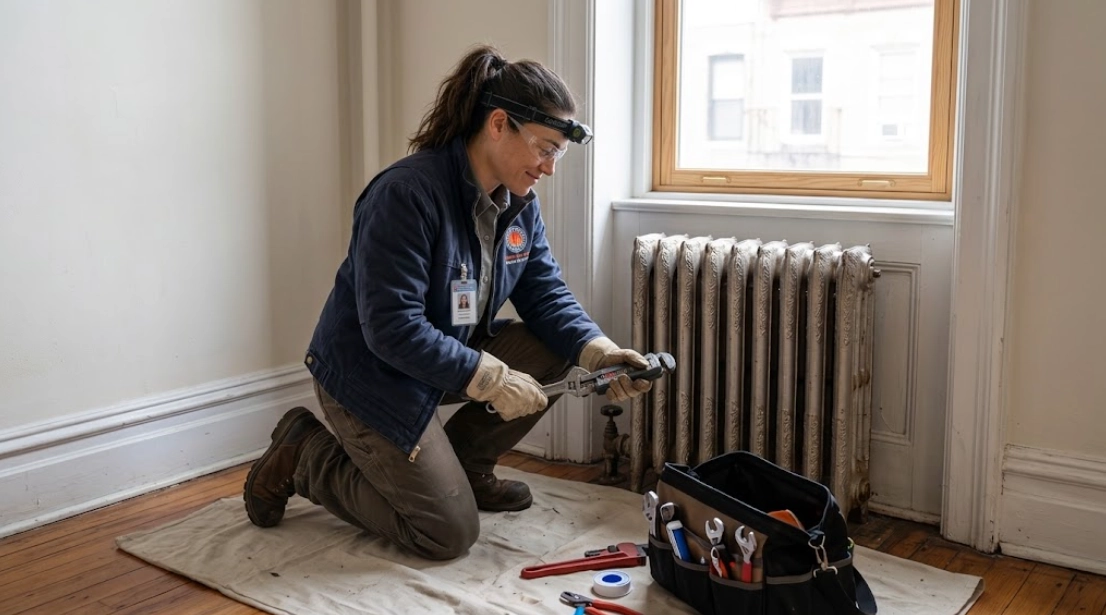
Eliminating Banging Steam Pipes and Water Hammer
One of the most disruptive complaints in Brooklyn steam-heated buildings is banging steam pipes Cypress Hills Brooklyn tenants and homeowners report during early morning heating cycles. Known technically as water hammer, this violent knocking is not just an annoying noise—it is a destructive hydraulic force that can crack cast-iron radiator sections, fracture pipe joints, and destroy air vents.
In a single-pipe steam system, steam travels upward through the exact same pipe that condensed water drains down. If the radiator does not have a continuous downward pitch toward the supply valve, condensate pools inside the radiator body. When high-velocity steam slams into trapped pool water, it picks up water slugs and flings them against pipe elbows at speeds exceeding 60 miles per hour. We eliminate water hammer by correcting radiator slope, shimming radiator feet, and ensuring main-line steam traps and air vents function freely.
Professional Steam Radiator Valve Replacement
Old radiator shut-off valves frequently leak around the packing nut when turned or seize up completely after years of standing stationary. When you need steam radiator valve replacement Cypress Hills Brooklyn service, we remove deteriorated brass valves, clean the cast-iron spud threads, and install heavy-duty steam-rated angle valves designed to withstand high thermal cycling without leaking onto your hardwood floors.
Homeowners should also note that single-pipe steam valves must always remain 100% fully open or 100% fully shut. Attempting to throttle room temperature by leaving a valve half-open chokes the condensate return path, causing water hammer and rapid packing leakage. If temperature moderation is needed in specific rooms, thermostatic radiator air valves (TRVs) can be installed safely.
Tired of Banging Pipes or Freezing Cold Radiators?
Schedule a diagnostic visit with our Cypress Hills steam heating specialists today to restore quiet, balanced warmth.
Call (315) 202-8009Common Steam Radiator Warning Signs
Cold Top-Floor Radiators
Trapped air unable to escape due to seized air vents or clogged basement main vents preventing steam from rising up the riser pipes.
Hissing and Spitting Vents
Worn air vents spewing rusty water and steam vapor that damages wallpaper, ruins painted walls, and rots adjacent subfloors.
Water Pooling on Floorboards
Failing valve stem packing, leaking spud unions, or hairline cracks between cast-iron radiator push-nipples under thermal stress.
The Crucial Role of Radiator Pitch and Main Venting
Proper steam heat distribution depends on two fundamental principles: gravity drainage and atmospheric air venting:
- Radiator Pitch: Over decades, floor joists settle in historic Brooklyn houses. If a radiator tilts even a quarter of an inch away from the supply pipe, water becomes trapped inside the far cast-iron loops. We precisely gauge the pitch with spirit levels and install permanent solid shims under radiator legs.
- Basement Main Quick Vents: Before steam can reach your second or third-floor radiators, huge volumes of cool air inside the large basement steam mains must be evacuated. Installing high-capacity main quick vents allows steam to fill main headers quickly, providing uniform heating across the entire building and reducing strain on your boiler repair and heating plant.
Step-by-Step Radiator Repair Process
System Depressurization & Inspection
We allow the heating circuit to cool, inspect valve stems, examine vent ports, and assess the pitch of all problematic radiators.
Component Removal & Thread Preparation
Failing valves or corroded air vents are removed. We inspect spud connections and clear mineral scale from radiator internal ports.
Precision Fitting & Pitch Adjustment
New heavy-duty brass steam valves and calibrated air vents are installed using high-temperature sealant. Radiators are re-shimmed for optimal drainage.
Live Heating Cycle Testing
We fire the boiler, trace steam propagation into the radiators, verify air vent shutoff when hot steam arrives, and confirm silent, knock-free operation.
Frequently Asked Questions About Radiator Repair
Banging steam pipes occur when returning condensed water collides with incoming high-velocity steam inside the pipe. This is almost always caused by an incorrect radiator pitch sloping away from the valve, a clogged air vent, or excessive boiler operating pressure above 2 PSI.
A cold radiator usually indicates a stuck air vent that fails to expel trapped air, preventing steam from entering the cast-iron sections. It can also stem from a partially closed inlet valve, a broken internal valve stem, or an unvented branch line.
Spitting vents have either reached the end of their operational lifespan or are flooded because condensate cannot drain back out of the radiator. Replacing the air vent and shimming the radiator feet to restore proper pitch resolves the issue.
No. In single-pipe steam systems, radiator supply valves must be completely open or completely closed. Leaving a single-pipe valve half-open restricts returning condensate, causing violent water hammer and severe valve stem leaks.
If your entire building suffers from uneven heating or chronic pressure issues, a broader system evaluation or boiler replacement may be needed. View our full coverage on our service areas page, or reach out to our technicians directly on our contact page.
Restore Balanced Heat to Your Home
Call (315) 202-8009 now to schedule steam radiator diagnostics and repairs in Cypress Hills, Brooklyn.
Call (315) 202-8009